
The Early Years
Miss Beatrice Clugston was born on Wednesday 19th September 1827 to Mary McKenzie and John Clugston. For most of her early life, she lived with her family in Larkhall, Lanarkshire, later moving to Lenzie. Her father was the owner of the bleaching company, John Clugston and Co., of Avonbank, Larkhall.

NHS Greater Glasgow & Clyde Archives
After the death of her father, in 1855, Miss Clugston moved to 21 Lansdowne Crescent in the West End of Glasgow. Whilst living there she would visit prisoners. She noticed how poorly they were treated when they were discharged from the infirmaries. As a result, she created the Dorcas Society of the Glasgow Royal Infirmary, to provide clothes and small sums of money to poorer patients of the infirmaries when they were discharged. She was involved with that society for six years, raising funds from bible classes to pay for the board and lodging costs of convalescent cases.
It took her little time to realise that patients returning to poor home conditions would have a slower recovery rate and decided to establish the Glasgow Convalescent Home at Bothwell, in 1865. She held a bazaar (a sale-of-goods-type fundraising event) to fund the home and raised £6,750. The home was the first of its kind in the West of Scotland. It was eventually relocated to Lenzie (between 1871 and 1873) and could accommodate 1,800 patients per year.
Miss Clugston was known as a ‘prodigious fundraiser’ (Ewan E, Innes S, and Reynolds S., 2007, p.77) and soon raised the money to establish a second convalescent home in Dunoon, which was opened by the Earl of Glasgow on Saturday 14th August 1869. The Dunoon Convalescent Home, or the West of Scotland Seaside Convalescent Homes, had capacity for 130 beds, later 250, becoming the largest of its kind in Scotland.

Mr Jerry Brannigan
Her name eventually became very popular and loved throughout Scotland. She was a lady who was ‘not content with thinking that a thing ought to be’ and refused to rest until her goals were realised (Blaikie, 1875, p.10).
The Founding of Broomhill Home
In 1874, she started what would later be described as her greatest work: the founding of the Association for the Relief of Incurables for Glasgow and the West of Scotland (ARI) and the founding of Broomhill Home.
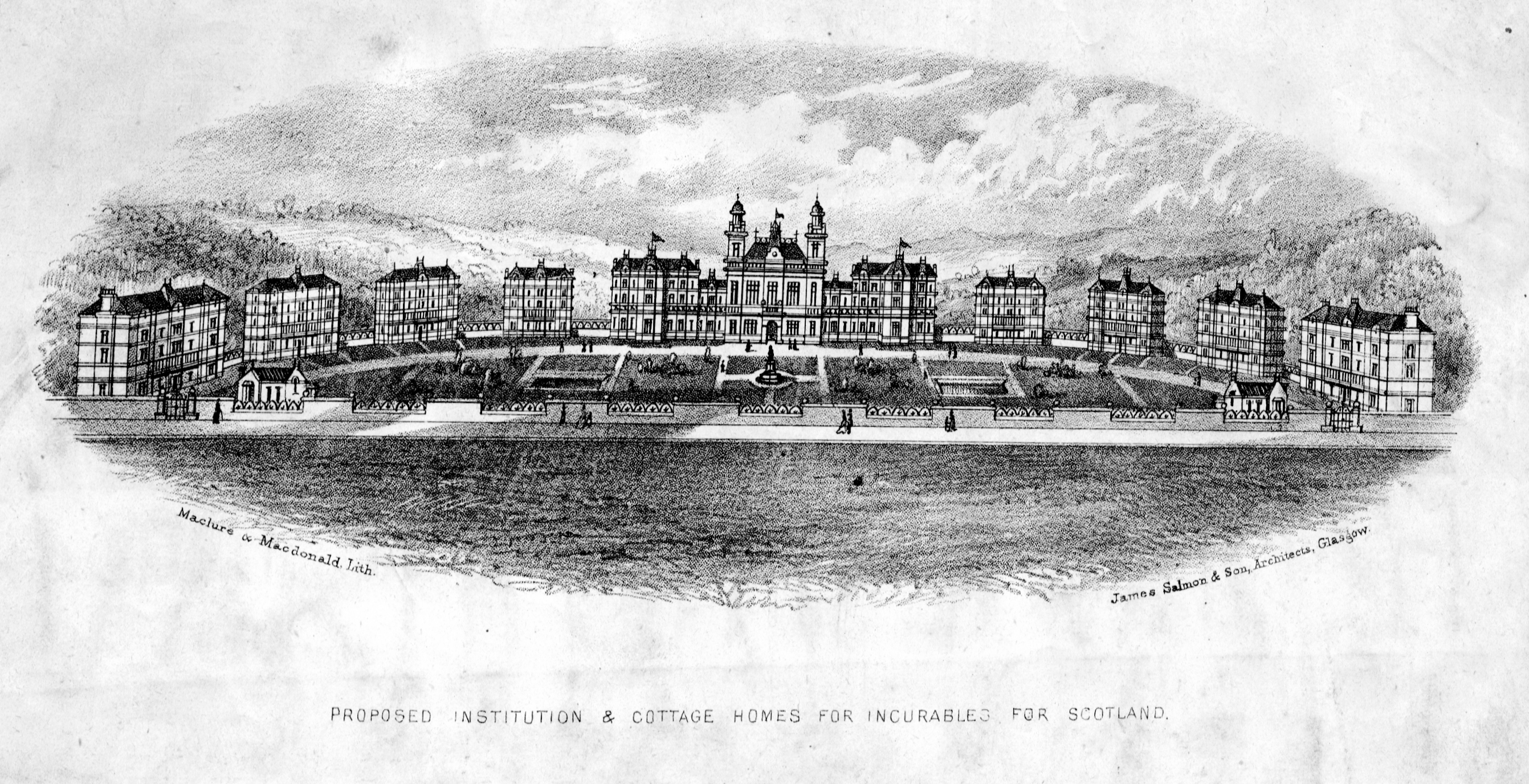
The first formal meeting of the ARI was held at noon on Friday 9th January 1874 at 157 St. Vincent Street, Glasgow. The initial plans were to create a national home for incurable patients, however, there was disagreement between the Glasgow and Edinburgh representatives so each city decided to build their own homes. It was agreed that a bazaar would be held to raise the funds needed to build the Glasgow home.
NHS Greater Glasgow & Clyde Archives
The Kibble Palace bazaar was thought to be Miss Clugston’s most successful fundraising event. It raised £13,905 and attracted over 30,000 visitors throughout the week it was held in April of 1875. The total takings, after later donations, was £23,362 6s 7d.
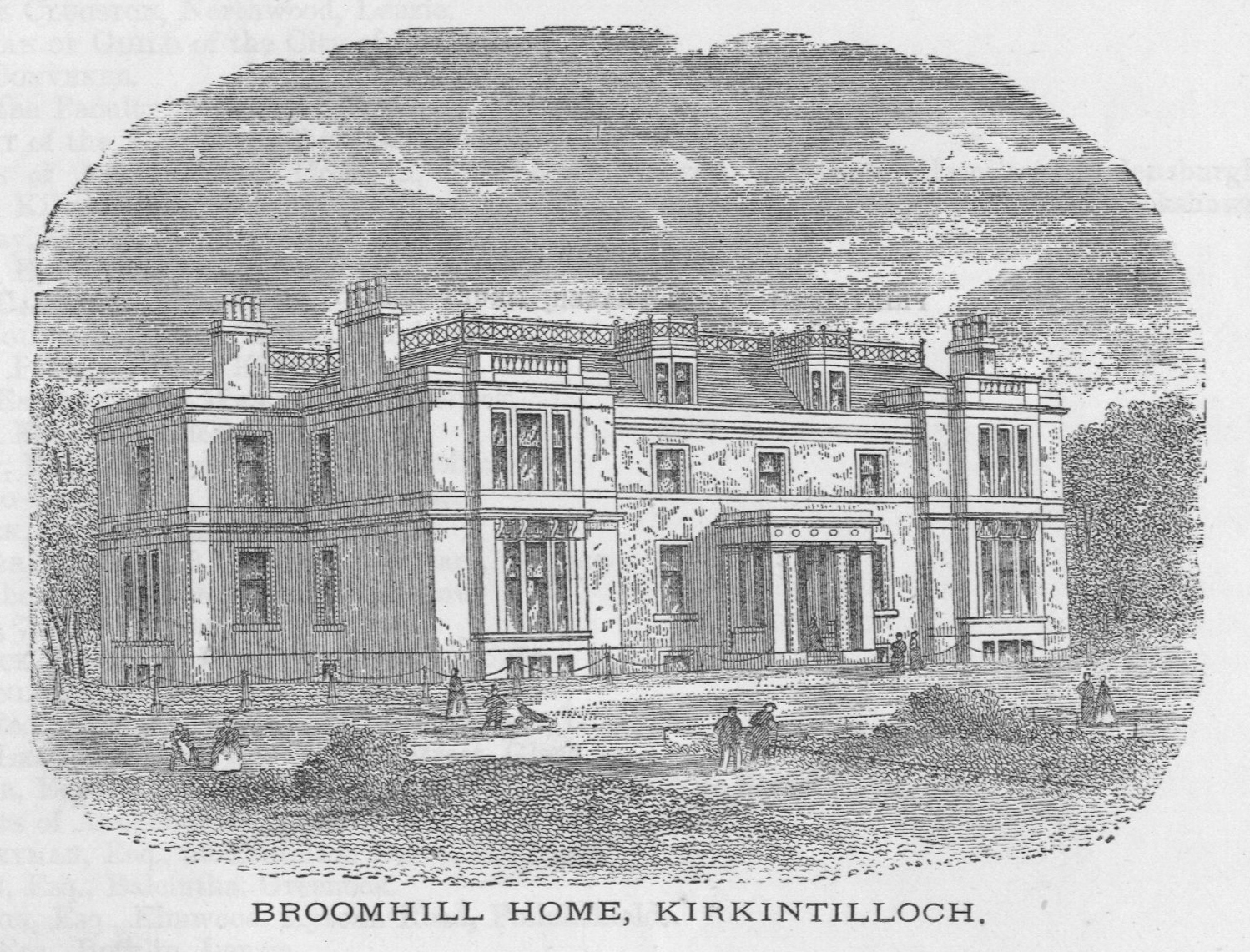
Whilst looking for a place to build her proposed new home she found a ‘small trust estate of Broomhill near Kirkintilloch’ (Minutes of Directors, 1875), which was to be sold for between £10,000 to £15,000. The estate had over 79 acres of land and the building was very sizeable.
It’s likely Miss Clugston was told about the estate by her uncle, Mr. James Clugston, who worked as a clerk for the owner, Mr. John Bartholomew of John Bartholomew and Co., merchants, Glasgow. Mr Clugston was named as a witness to a disposition of Mr. Bartholomew, dated 10th September 1858, which related to the lands of the Broomhill estate.
NHS Greater Glasgow & Clyde Archives
No offers were made for the estate on the day of auction and the sale was adjourned. A private offer was agreed and it was purchased by the ARI for £14,000. Soon after the sale, a letter written by Miss Clugston about Broomhill Home was included in the Glasgow News (Thursday 29th July 1875):
‘My daily prayer is that now the angels may watch over its walls, and that afterwards, when filled with sufferers, these bright spirits who “excel in strength” may fly on errands of mercy, and thus carry out ministrations of love which finite creatures fail to accomplish’.
NHS Greater Glasgow & Clyde Archives
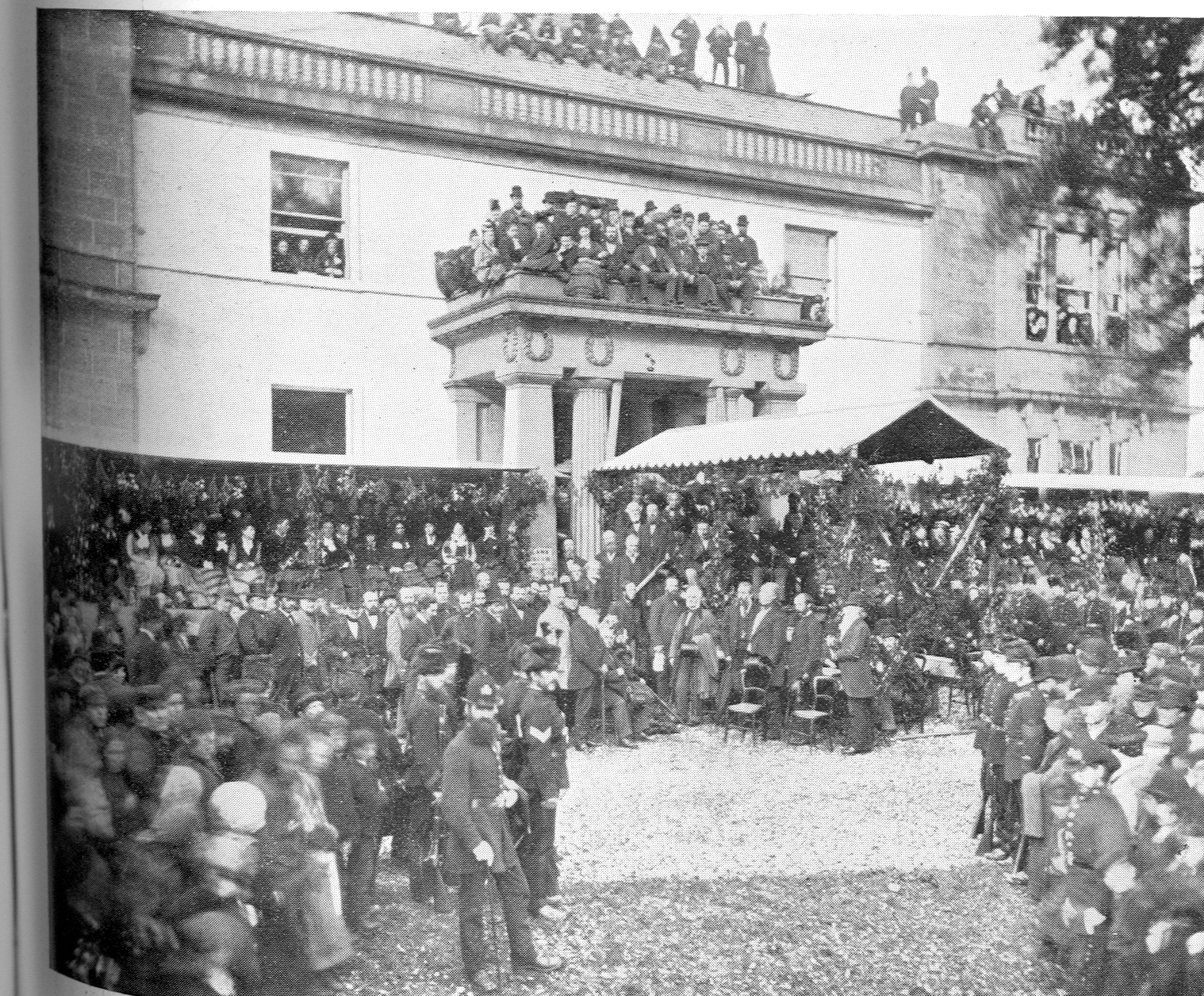
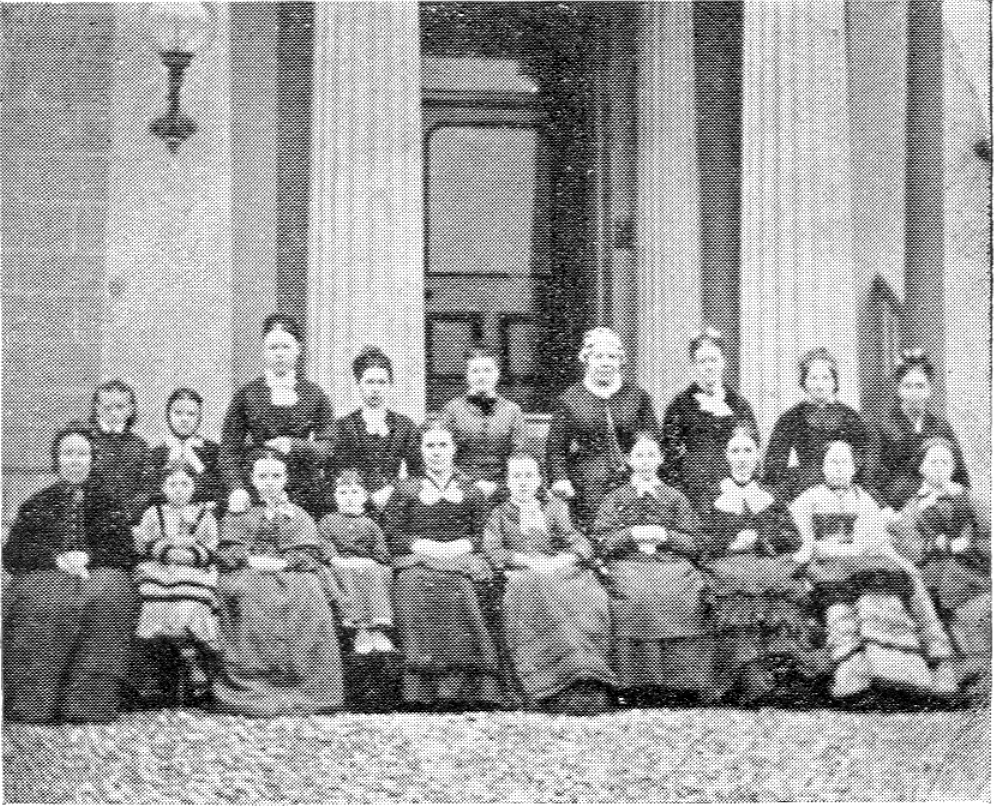
Broomhill Home began accepting patients on Thursday 14th September 1876, the first being Mr. William Wylie, aged 20, of Cowgate Street, Kirkintilloch. He suffered from scrofulous disease of the hip and knee joints. Due to the sheer discomfort riding in a cart would cause him, Mr. Wylie was carried about a mile to the home on an improvised stretcher (a linen sheet attached to two poles). When he got there, Miss Clugston and her mother greeted him then brought him to a bed, where he was tended to by Mrs. Clugston. He would die a few years later.
NHS Greater Glasgow & Clyde Archives
On Tuesday 28th November 1876, the ARI presented Miss Clugston with a testimonial of £3,116 11s 5d as a thank you for her work. The money was raised privately by her friends. £2,500 of the money was invested in guaranteed railway company stocks (requested by Miss Clugston) and the remainder was given to her in person. At the presentation, Mr. William Holms, M.P., said:
‘Miss Clugston would require no monument to be reared to her memory. The Convalescent Homes at Lenzie and Dunoon, and the Home for Incurables at Kirkintilloch, were the best monuments of her works of philanthropy’.
Miss Clugston thanked the ARI, saying:
‘Goodness and mercy have followed me all the days of my life, but 22 years of pleading for, journeying for, and ministering to human sorrow, are not at all fitted to increase one’s own private resources’.
Extending Broomhill Home
In 1878, Miss Clugston began travelling the country holding meetings to raise money and support to extend Broomhill Home. She raised £1,820 16s 1.5d by the end of the year. She continued the meetings throughout 1879 and 1880, with plans to eventually hold a second bazaar.
An article within the Ardrossan and Saltcoats Herald at the time wrote about the appeals she made at her meetings:
‘Her text was human suffering; her illustrations were drawn from enfeebled frames, where disease had become chronic, from sick-beds and dying-beds; and her highest appeal, the example of the Master’.
On Friday 9th January 1880, Miss Clugston revealed she was in contact with an individual identified by the initials M.W. This anonymous person intended to bequeath between £5,000 and £15,000 to the ARI for the purpose of founding a home for consumptive (TB) patients. The donor wanted the home to be associated with Broomhill Home. This would be the first recorded mention of a bequest that would be made several decades later by Miss Martha Brown of Lanfine, Ayrshire, to found Lanfine Home. It was later revealed that Miss Clugston was the person who convinced Miss Brown to leave the bequest.
The first day of Miss Clugston’s second bazaar for Broomhill Home took place on Monday 13th March 1882. The Glasgow News mentioned Miss Clugston’s past meetings to prepare for the event:
‘The objects in view have been so widely explained and persistently advocated by Miss Clugston that they are well understood and appreciated by the whole country’.
Over 35,000 people attended the bazaar throughout the week and the total raised for Broomhill Home was £8,788 15s 5d. Money was also raised for some of Miss Clugston’s other homes during the event. The ARI decided to build a new wing of Broomhill Home and limit the expenses to £4,500. Approval was later given, on Friday 8th December 1882, to plans for the new wing. They were created by Messrs James Salmon and Son, architects.
The extension was estimated to cost £4,400, excluding furnishings. This estimate later rose to £6,000 with the estimates for furnishings (£500) and the fees of the architects, measurers, and inspector of works, as well as the work associated with removing an embankment at the front of the home (£1,100).

Auld Kirk Museum, East Dunbartonshire Leisure & Culture

Auld Kirk Museum, East Dunbartonshire Leisure & Culture
The Death of Miss Beatrice Clugston
On the morning of Monday 4th June 1888, Miss Clugston, aged 61, was found deceased in her bedroom whilst on holiday in Ardrossan. Miss Clugston had been staying at 3 Arran Place and went to bed in her usual health at 10pm on Sunday 3rd June. Dr. Wallace of Newton Terrace, Glasgow, later announced her cause of death was heart disease.
Miss Florence Nightingale commented on Miss Clugston’s death at the time:
‘We ought to bless God for such a life as dear Miss Clugston – such a work. And now what a glorious rest is hers!’.
A private funeral was held for her on Friday 8th June 1888, with the patients of the Lenzie Convalescent Home following the procession to the churchyard. A religious service was held by Rev. Mr. Steel of Greenhead Church, Glasgow; Rev. William Patrick of Free St David’s, Kirkintilloch; and Rev. Mr. Brown of St Andrew’s Church. The pallbearers were Mr. James Clugston, Rev. James Clugston, Mr. James Clugston Jr, Rev. Mr. Patrick, Rev. Mr. Steel, Rev. Mr. Miller, Mr. Leonard Gow, and Mr. William MacLean. A large number of wreaths had been sent from all over the country as well as from the patients of Broomhill Home, Lenzie Convalescent Home, and the Dunoon Convalescent Homes. Miss Clugston was buried in the Auld Aisle Cemetery.
During a past public meeting in Paisley, held in September of 1880, Miss Clugston spoke about her eventual death:
‘When these eyes no longer behold scenes of sorrow, but rest instead on the celestial glories of the better country, I hope that one portion of my song of praise will be, that by witnessing human sorrow in England I have in some measure aided in its mitigation in our beloved Scotland’.
A religious service in memory of Miss Clugston was held at Broomhill Home by Rev. Mr. William Patrick on Wednesday 13th June 1888, at the request of the matron and patients. Two days later, the directors prepared minutes of sympathy, which would be given to Miss Clugston’s family.
The Monument of Miss Clugston
On Friday 12th October 1888, the ARI decided to create a monument in memory of Miss Clugston. It was to be placed above her grave at the Auld Aisle Cemetery. Rev. Mr. Patrick and Messrs MacLean and Kerr, all directors of the ARI, were appointed to act with representatives from the other institutions founded by Miss Clugston to have the monument created.
Between £20 and £25 had been offered by the directors of the Dunoon Convalescent Homes as a contribution to the monument. The condition of the donation was dependent on the directors of Broomhill Home and the Glasgow Convalescent Home contributing the same amount. The directors of the Glasgow Convalescent Home refused to offer a donation from the home funds and so offered to contribute personally. The directors of the ARI decided to do the same thing.
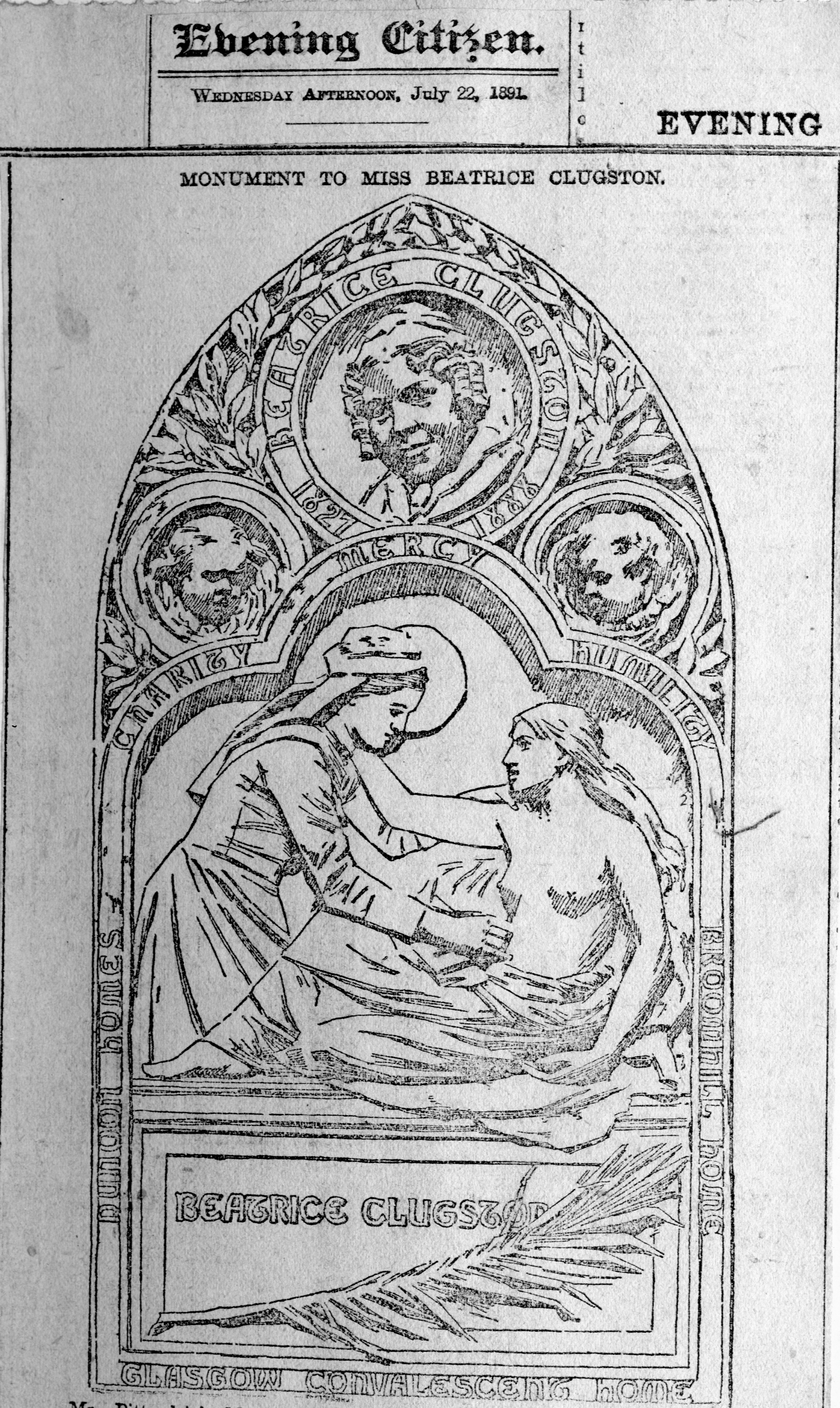
It was decided that a red sandstone monument inlayed with a bronze panel would be created. Sandstone from the Corncockle Quarry in Dumfries was used. It was to be 14ft tall and include a portrait of Miss Clugston embossed onto an inlayed bronze panel supported by octagon pillars. The panel was designed by Mr. Pittendrigh MacGillivray, a renowned Scottish sculptor. The gothic stone design was drafted by Mr. W.F. Salmon, the stonework was completed by Messrs Thaw and Campbell of Glasgow and the carving work by Mr. James Young of Glasgow.
By mid-October of 1891, the sandstone part of the monument was installed at Auld Aisle Cemetery, with the bronze inlay still to be installed. The monument weighed ten tonnes and was delivered from Glasgow by five carts, pulled by four horses.
The bronze panel design was thought to be ‘a fit emblem to summarise the life work of Miss Clugston, whose medallion (a noble piece of work and a speaking likeness of the original) occupies the upper part of the stone’ (Morrison, 1926, p.82).
NHS Greater Glasgow & Clyde Archives
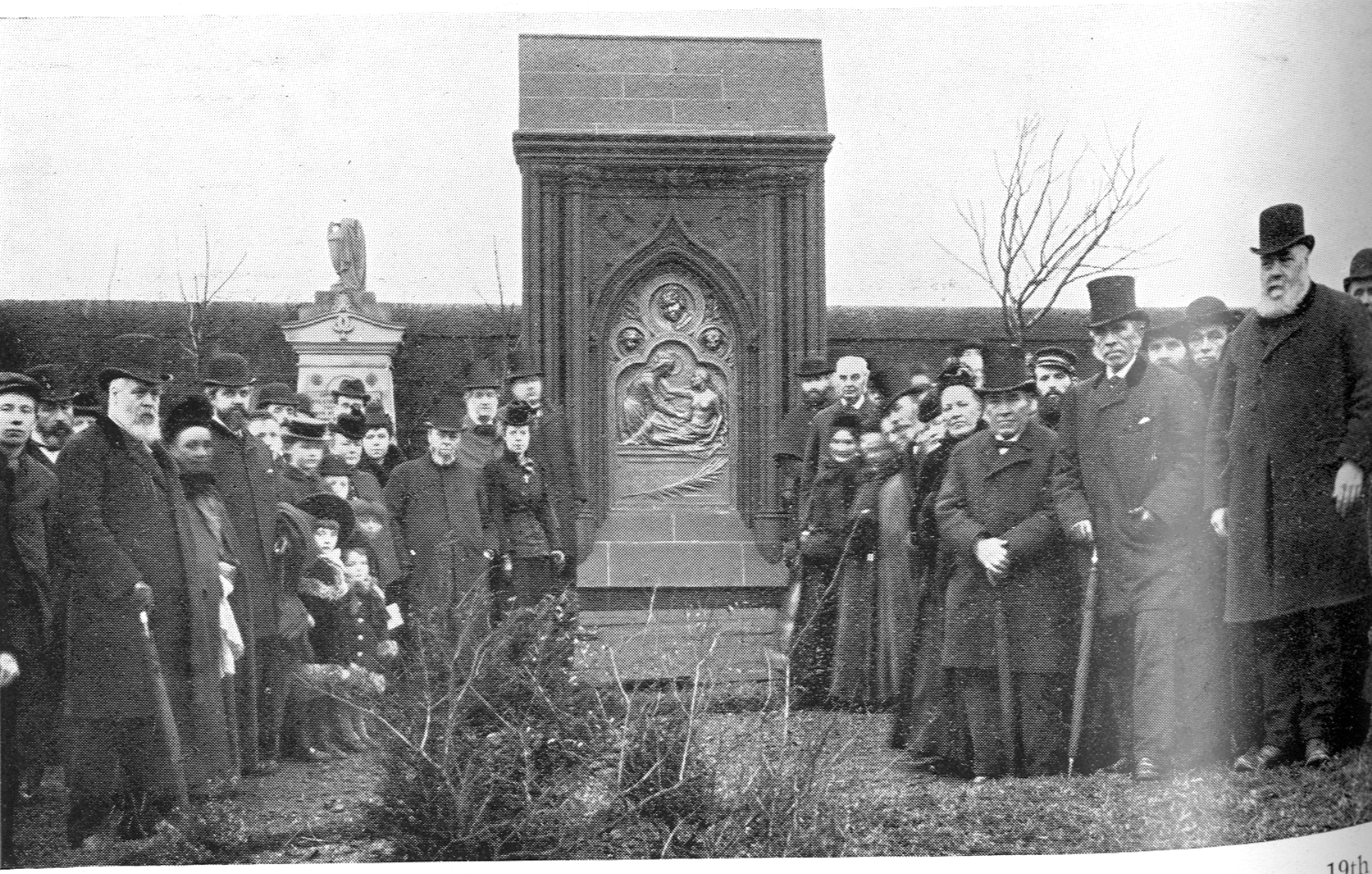
The monument was formally unveiled at the Auld Aisle Cemetery on Saturday 19th December 1891. The weather was poor on the day, which lowered the attendance (over 34 attendees and 24 absences). Among those present were Rev. William Patrick, ex-Provost Ferguson, Miss Mary Clugston of Lenzie, Mr. Leonard Gow, Mr. George Munro Kerr, Mr. and Mrs. W.F. Salmon, and Dr. W.T. McAuslane.
Mr. William MacLean was one of the oldest surviving friends of Miss Clugston and spoke about her during the ceremony:
‘What wonderful power she manifested in forcing upon the notice of the public the claims of her different schemes. What an influence she wielded over heart and purse! With what patience she plodded on her way! What ability she displayed in organising her different bazaars, which for attractiveness and success had never before been equalled! And above all what believing prayerfulness characterised all her proceedings! She sought the divine guidance and help in all she undertook’.
Mr. Leonard Gow also spoke:
‘Leader and follower will alike disappear from amongst the living, and it is therefore gratifying to her relatives that this monument will remain for generations–(hear, hear)–to preserve to posterity the features and perpetuate the memory of her who did so much good during her day and generation’.
Rev. Mr. William Patrick closed the ceremony and Mr. John Annan photographed the crowd and monument.
NHS Greater Glasgow & Clyde Archives
The total expenses for the monument came to £176 15s 2d. Mr. Pittendrigh MacGillivray received £45 in July of 1891 and £40 in November of 1891 for the design of the bronze inlay. Messrs Thaw and Campbell, masons, were paid £68. Mr. James Young of Glasgow received £15 for carving work and Messrs James Salmon and Son received 18s for the scaffolding. 8s 6d was paid to Aird and Coghill for printing 220 invitations to the memorial unveiling. Small sums were also paid to newspapers.
The Legacy of Miss Clugston
Miss Clugston was commemorated at the homes for many years after her death. She was a heavy topic of discussion at the 50th annual general meeting of the ARI in 1925. Mr. Leonard Gow, the son of the late Dr. Leonard Gow, shared his memories of Miss Clugston:
‘I remember hearing, when she and her old mother left Glasgow to live at Lenzie, that her mother, a dear old Scotch lady, said she was thankful they had left Glasgow, as her daughter, Beatrice, was constantly bringing in the halt, the lame, and the blind to be fed and clothed, with the consequence that her cupboards were kept bare and her carpets lasted no time. A woman of her glowing optimism had her days of deep depression, and I have seen her weeping like a child pouring out her trouble to my parents and seeking comfort and advice’.
In 1931, a new wing was built at Broomhill Home. It was named after the Duchess of Montrose, who was a very active contributor at the homes for decades. The House Committee decided to also create a commemorative plate for the doorway of the dayroom for the female patients at Broomhill Home and Hospital (as it was then known). The room was to be named ‘The Miss Beatrice Clugston Room’. A bronze tablet was created; it cost £17 10s. The tablet would hang there until the hospital closed in 1995.

Auld Kirk Museum, East Dunbartonshire Leisure & Culture
Today, the former site of Broomhill and Lanfine Homes is now housing. Lanfine Homes was demolished somewhere in the late 1980s and the remainder of Broomhill Home was demolished in 2015. Cala Homes were willing to name the streets and area after Miss Clugston and the homes. They decided to create Beatrice Meadows, Clugston Court, Lanfine Drive, Wylie Court, and Broomhill Drive. Wylie Court is named after Mr William Wylie, the first patient admitted to Broomhill Home in September 1876.

Scott Crawford
Sources
The content in this article is sourced from The History of Broomhill and Lanfine Homes by Scott Crawford. The source material used in the writing of the book, and this article, is included below:
- Album relating mainly to Broomhill and the charitable activities of Beatrice Clugston. HB31 6/2 (1880- 84). Mitchell Library, Glasgow. NHS Greater Glasgow and Clyde Archives, Records of Broomhill and Lanfine Hospitals. 1998. pp.4-100.
- Album relating to Broomhill, the Broomhill ‘Ladies Auxiliary’, and the Association for the Relief of Incurables. HB31 6/3 (1885-1904). Mitchell Library, Glasgow. NHS Greater Glasgow and Clyde Archives, Records of Broomhill and Lanfine Hospitals. 1998. pp.1-114.
- Album relating to the Scottish National Institution for Incurables, the Association for the Relief of Incurables for Glasgow and the West of Scotland, and Broomhill Home. HB31 6/1 (1874-81). Mitchell Library, Glasgow. NHS Greater Glasgow and Clyde Archives, Records of Broomhill and Lanfine Hospitals. 1998.
- Annual reports of the Association for the Relief of Incurables for Glasgow and the West of Scotland. HB31 2/1 (1875-84). Mitchell Library, Glasgow. NHS Greater Glasgow and Clyde Archives, Records of Broomhill and Lanfine Hospitals. 1998.
- Annual reports of the Association for the Relief of Incurables for Glasgow and the West of Scotland. HB31 2/2 (1885-99). Mitchell Library, Glasgow. NHS Greater Glasgow and Clyde Archives, Records of Broomhill and Lanfine Hospitals. 1998.
- Annual reports of the Association for the Relief of Incurables for Glasgow and the West of Scotland. HB31 2/4 (1913-30). Mitchell Library, Glasgow. NHS Greater Glasgow and Clyde Archives, Records of Broomhill and Lanfine Hospitals. 1998.
- Barr W. Personalities of the Past. The Springburn Association. 1972; (5). Mitchell Library, Glasgow (AGN391.12). p.12.
- Blaikie, W.G. Miss Clugston and Her Work. GC 920 CLU. Glasgow. W.G. Blackie & Co. 1875. pp.5-10.
- Broomhill Hospital Boundaries: correspondence. HB39 3/9 (1950-52). Mitchell Library, Glasgow. NHS Greater Glasgow and Clyde Archives, Records of Kirkintilloch and Kilsyth Hospitals Board of Management. 1998.
- Broomhill house committee minutes. HB31 1/14 (1927-36). Mitchell Library, Glasgow. NHS Greater Glasgow and Clyde Archives, Records of Broomhill and Lanfine Hospitals. 1998. pp.5-462.
- Broomhill house committee minutes. HB31 1/7 (1876-81). Mitchell Library, Glasgow. NHS Greater Glasgow and Clyde Archives, Records of Broomhill and Lanfine Hospitals. 1998.
- Broomhill house committee minutes. HB31 1/8 (1881-91). Mitchell Library, Glasgow. NHS Greater Glasgow and Clyde Archives, Records of Broomhill and Lanfine Hospitals. 1998. pp.154-646.
- Cash book for subscriptions and expenditure for a ‘Monument to Miss Beatrice Clugston’ and related receipts for work carried out. HB31 7/30 (1890-92). Mitchell Library, Glasgow. NHS Greater Glasgow and Clyde Archives, Records of Broomhill and Lanfine Hospitals. 1998.
- Checkland, O. Clugston, Beatrice (1827–1888), Oxford Dictionary of National Biography, Oxford University Press. 2004.
- Clugston, James, of “Viewfield”, Lenzie, Trust Book, 1869-1891. T-MR/72. Mitchell Library, Glasgow. 1860. pp.1-8.
- Comrie J. History of Scottish Medicine. 2nd ed. London. Bailliere, Tindall, and Cox. 1932. pp.449-513.
- Ewan E, Innes S, and Reynolds S. The Biographical Dictionary of Scottish Women. Edinburgh. Edinburgh University Press. 2007. p.77.
- General business letter books – copy letters. HB31 4/1 (1874-80, No. 1). Mitchell Library, Glasgow. NHS Greater Glasgow and Clyde Archives, Records of Broomhill and Lanfine Hospitals. 1998. p.118.
- General business letter books – copy letters. HB31 4/2-3 (1880-86, Nos. 2 and 3). Mitchell Library, Glasgow. NHS Greater Glasgow and Clyde Archives, Records of Broomhill and Lanfine Hospitals. 1998. p.452.
- Kirkintilloch Hospitals. LC362.11. William Patrick Library Local Collection, Kirkintilloch, Glasgow. Strathkelvin District Libraries. 1976. pp.1-30
- Let Broomhill Flourish (Hospital Magazine) (1991-93). LC 362.16. William Patrick Library Archives, Kirkintilloch, Glasgow.
- Minutes of directors (to 1875) and committees of the Scottish National Institute for Incurables and the Association for the Relief of Incurables for Glasgow and the West of Scotland. HB31 1/1 (1874-8). Mitchell Library, Glasgow. NHS Greater Glasgow and Clyde Archives, Records of Broomhill and Lanfine Hospitals. 1998.
- Minutes of the directors of the Association for the Relief of Incurables for Glasgow and the West of Scotland. HB31 1/2 (1876-83). Mitchell Library, Glasgow. NHS Greater Glasgow and Clyde Archives, Records of Broomhill and Lanfine Hospitals. 1998.
- Minutes of the directors of the Association for the Relief of Incurables for Glasgow and the West of Scotland. HB31 1/3 (1883-99). Mitchell Library, Glasgow. NHS Greater Glasgow and Clyde Archives, Records of Broomhill and Lanfine Hospitals. 1998. pp.7-325.
- Morrison A D. The Story of Free St. David’s: Now St. David’s United Free Church, Kirkintilloch, 1843-1926. D. MacLeod. 1926. pp.81-86.
- Pamphlets. HB31 7/12 (1874-1935). Mitchell Library, Glasgow. NHS Greater Glasgow and Clyde Archives, Records of Broomhill and Lanfine Hospitals. 1998.
- Register of patients admitted to Broomhill Home, registration numbers 1-1362. HB31 5/1 (1876-1943). Mitchell Library, Glasgow. NHS Greater Glasgow and Clyde Archives, Records of Broomhill and Lanfine Hospitals. 1998. p.1.
- Richardson H. Building up our Health: the architecture of Scotland’s historic hospitals. Historic Scotland. 2010. pp.91-92.
If you have any queries relating to the article and/or its content, please feel free to get in touch.
Leave a Reply